

Introducing Dr sc ing Linda Lancere
We are pleased to welcome Dr sc ing Linda Lancere to the GRACE team. Linda is a healthcare enthusiast with experience in VR, AR, XR, and UX, bringing a fresh perspective on the relationship between healthcare and emerging technologies. As a researcher at our partner institution, Vidzeme University of Applied Sciences (ViA), Linda strengthens the GRACE programme by contributing practical insights and fostering collaboration between academic study and real-world practice.
Linda’s background includes a PhD in medical engineering. After completing her doctorate, she worked in several start-ups, including a 3D printing company developing software for prosthetic customisation, as well as a company creating VR simulations for first responders. Following these industry experiences, Linda transitioned into research. Alongside her research role at Vidzeme University of Applied Sciences, she is also active in education, teaching innovation and project management. In addition, she serves as a mentor for multidisciplinary teams in co-creation labs, all connected to healthcare and rehabilitation.
Driven by her passion for mentoring
Over the past year, she has been primarily involved in mentorship programmes, with a particular focus on developing methodologies for collaboration between company representatives and students. This work addresses not only how students should be trained, but also what kinds of mentorship structures companies may need, and how to ensure a smooth and effective mentorship experience. As mentorship is not always clearly structured, this has become an important area for improvement.
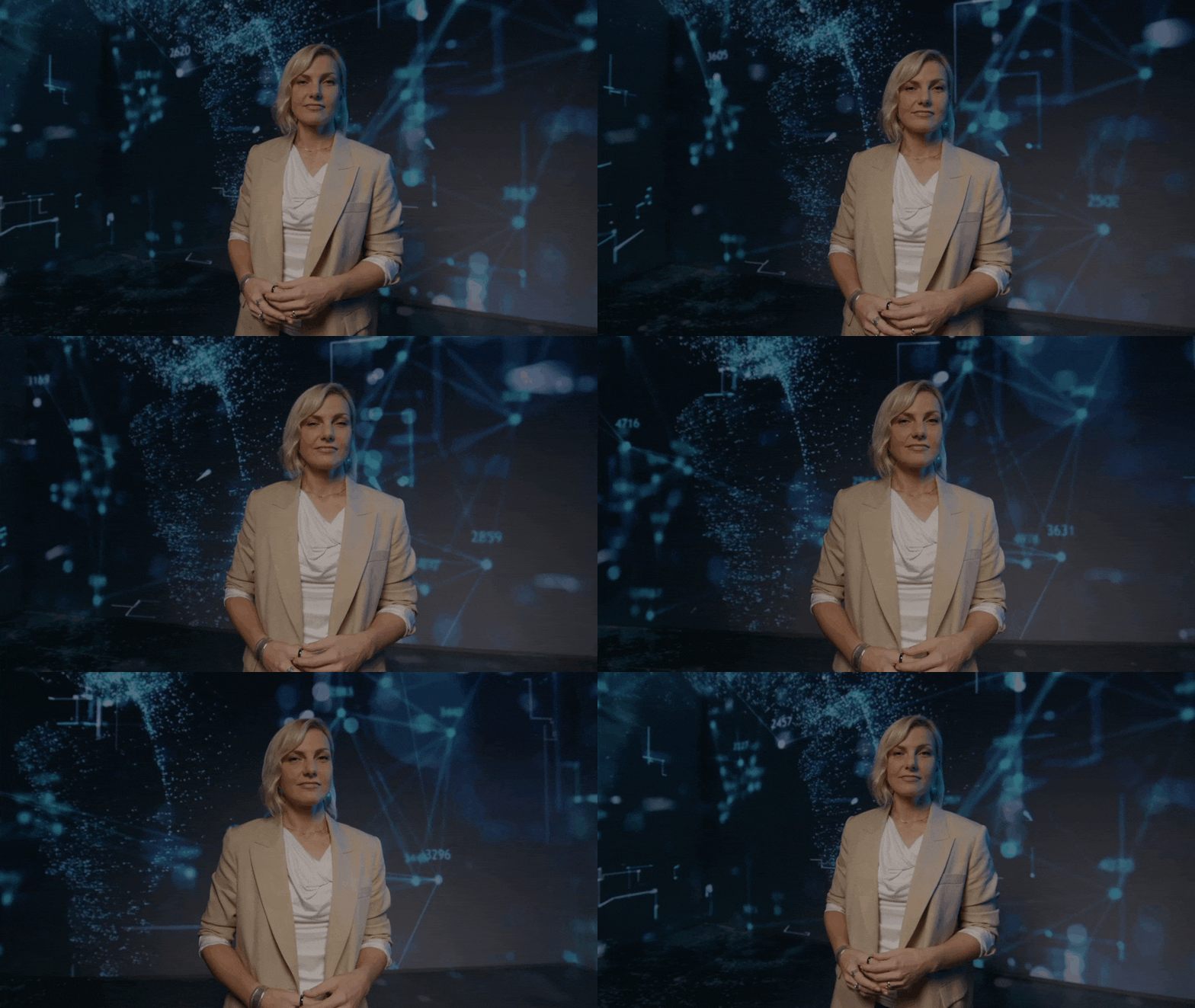
Her involvement in GRACE began around three years ago, when the Director of the VR/AR study programme at Vidzeme University of Applied Sciences, Edmunds Jansons, invited Linda to join one of the working sessions as a healthcare representative. During these sessions, discussions focused on key healthcare topics such as clinical validation, effective communication with clinicians, and aligning technology with clinical requirements and limitations. The importance of adapting products to specific target groups and user needs was also emphasised.
Later, she became more actively involved in the mentorship programmes, which are a particular passion of hers. Having benefited from mentors who significantly shaped her professional path, she strongly emphasises the importance of a high-quality mentorship framework within the GRACE study programme.
Perspectives of VR, AR, and XR in healthcare
“Regarding the perspectives of VR, AR, and XR in healthcare, I can say that we are finally approaching a point where these technologies are increasingly understood and accepted.”
As a result, XR is becoming easier to implement in clinical environments. There is growing recognition of how beneficial these technologies can be, particularly in improving patient motivation and significantly enhancing clinical training outcomes.
Looking ahead, as technologies continue to evolve and become easier to use, and with AI increasingly integrated into these systems, it will become possible to deliver highly individualised experiences. This is a crucial aspect of healthcare, where personalised treatment is essential.
Future of GRACE graduates
For graduates of the GRACE study programme, Linda sees career opportunities across a wide range of institutions, including hospitals, start-ups, companies, schools, and universities, particularly within innovation and development departments.