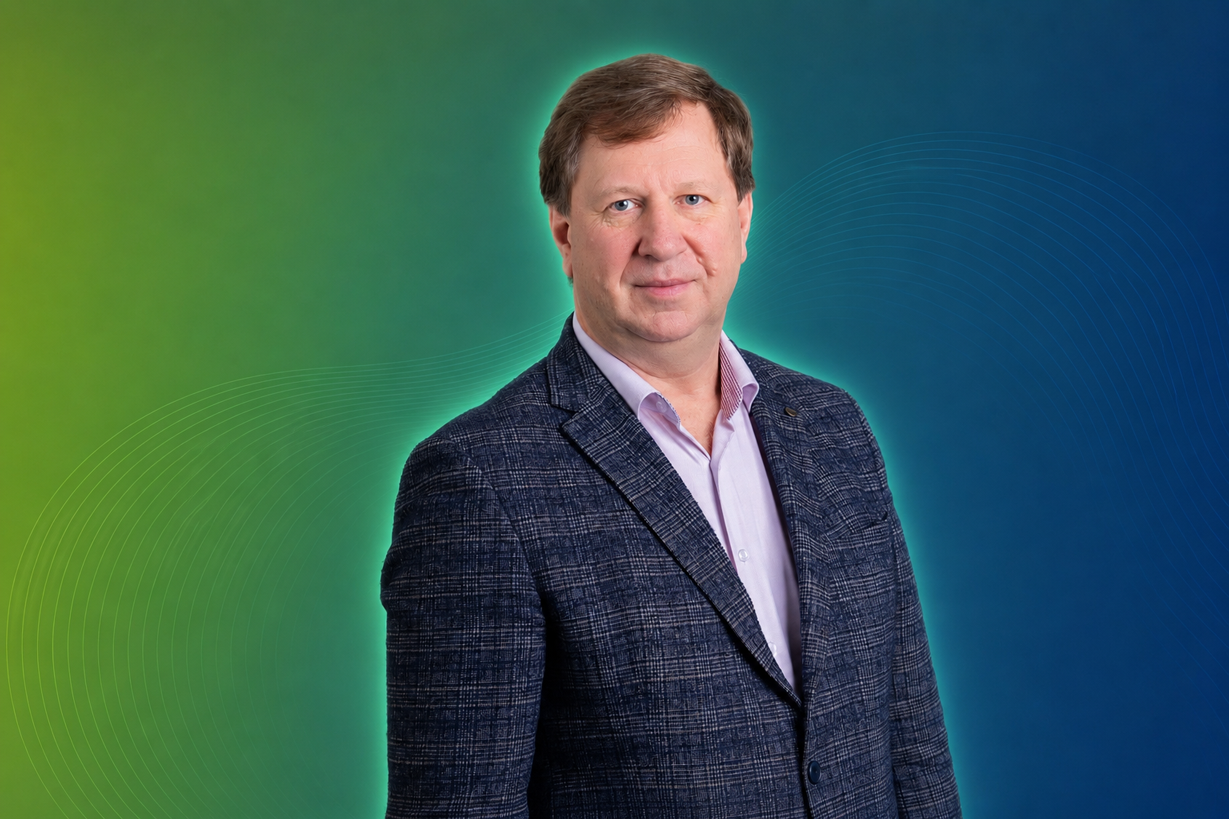
Meet Uldis Žaimis, GRACE’s new Deputy Academic Director at Vidzeme
Uldis Žaimis has joined the GRACE Joint Master’s Programme as Deputy Academic Director representing Vidzeme University of Applied Sciences (ViA). Alongside this role, he is the new director of the IT study field at ViA, bringing extensive experience in physics, IT, electronics, engineering, education, and applied research to both positions.
His professional journey has included roles as a physics teacher, electronics engineer, lecturer, researcher, and leader of both a scientific institution and a degree programme. He has taught courses related to physics, electrical engineering, electronics, the Internet of Things, robotics, and modelling, while also contributing to applied research projects with companies and researchers from other higher education institutions.
“These days, the ability to combine different areas of knowledge is often what leads to the most exciting solutions.”
This interdisciplinary perspective closely connects with GRACE’s approach to education. Within the programme, students combine technology, design, gamification, research, and real-world application while working on challenges together with external partners.
Connecting studies with real-world challenges
One of Uldis’ key priorities is strengthening the connection between theoretical knowledge and practical experience. He sees strong potential in project-based education in which students work on real-world challenges posed by companies, public institutions, or research organisations.
“It is important for students to understand why a particular course is necessary, how it connects with other courses, and where the knowledge they gain can be applied in practice.”
In his own work, Uldis has combined IT, electronics, mechatronics, and materials science. He would like to bring this same interdisciplinary mindset into student projects, creating opportunities for students to combine different areas of expertise and apply them in practice.
For Uldis, students should be able to demonstrate more than academic results alone.
“It is important that, by the end of their studies, students can present not only a transcript of their academic results, but also a portfolio of concrete work they have completed – developed software, a data solution, a robotics system, a prototype, or an improvement implemented for a company.”
This strongly reflects the practice-oriented philosophy of GRACE, where students develop their own projects throughout the programme and work closely with lecturers, mentors, and industry partners.
International collaboration within GRACE
Uldis views GRACE’s international structure as an important part of both professional and personal development. Students study across Austria, the Netherlands, and Latvia, experiencing different academic environments and working within an international community.
“By moving between countries and study environments, students develop independence, the ability to adapt, collaborate in an international team, and communicate with people who have different experiences.”
At the same time, he acknowledges that a joint international programme also requires close and continuous cooperation between the partner universities. For Uldis, this complexity is also one of its strengths: it creates opportunities to compare experiences, learn from one another, and jointly maintain a high standard of programme quality.
Strengthening the connection between GRACE and Vidzeme
In his role at Vidzeme University of Applied Sciences, Uldis also aims to strengthen collaboration between students, lecturers, companies, and public institutions. He sees opportunities to further develop the IT and technology community in Valmiera and the wider Vidzeme region, while creating new connections between education and professional practice.
For GRACE, his combined roles create a strong link between the joint programme and Vidzeme’s broader IT and technology environment.
“A good first year for me would be one after which students feel they have new opportunities, lecturers see a shared direction for development, companies and public institutions increasingly view ViA as a natural partner for cooperation, and the university’s IT skills make a visible contribution not only to the development of the Vidzeme region, but to the development and resilience of Latvia as a whole.”